Video games have been banned, censored, and blamed for social problems since the medium became mainstream. The pattern repeats: a game depicts something that disturbs public sensibility, media coverage amplifies the concern, politicians respond with proposed legislation, and the industry changes — sometimes voluntarily, sometimes under pressure.
Here's the history of how this played out, and what it actually produced.
The First Panic: Death Race (1976)
One of the first documented moral panics around a video game involved Death Race, an arcade cabinet from 1976. Players drove cars over stick figures that let out a scream when hit. The imagery is primitive by today's standards; in 1976, it was enough to trigger a 60 Minutes segment, protests outside arcades, and calls for the game to be banned.
The manufacturer pulled the game. This established a pattern: public pressure can remove a product from distribution without formal legal action.
The Senate Hearings: Mortal Kombat and Night Trap (1993)
In 1993, Senator Joseph Lieberman held Senate subcommittee hearings on video game violence, specifically targeting Mortal Kombat (known for graphically depicted fatality finishing moves) and Night Trap (a live-action FMV game that implied violence against women). The hearings received significant media attention and created genuine legislative threat.
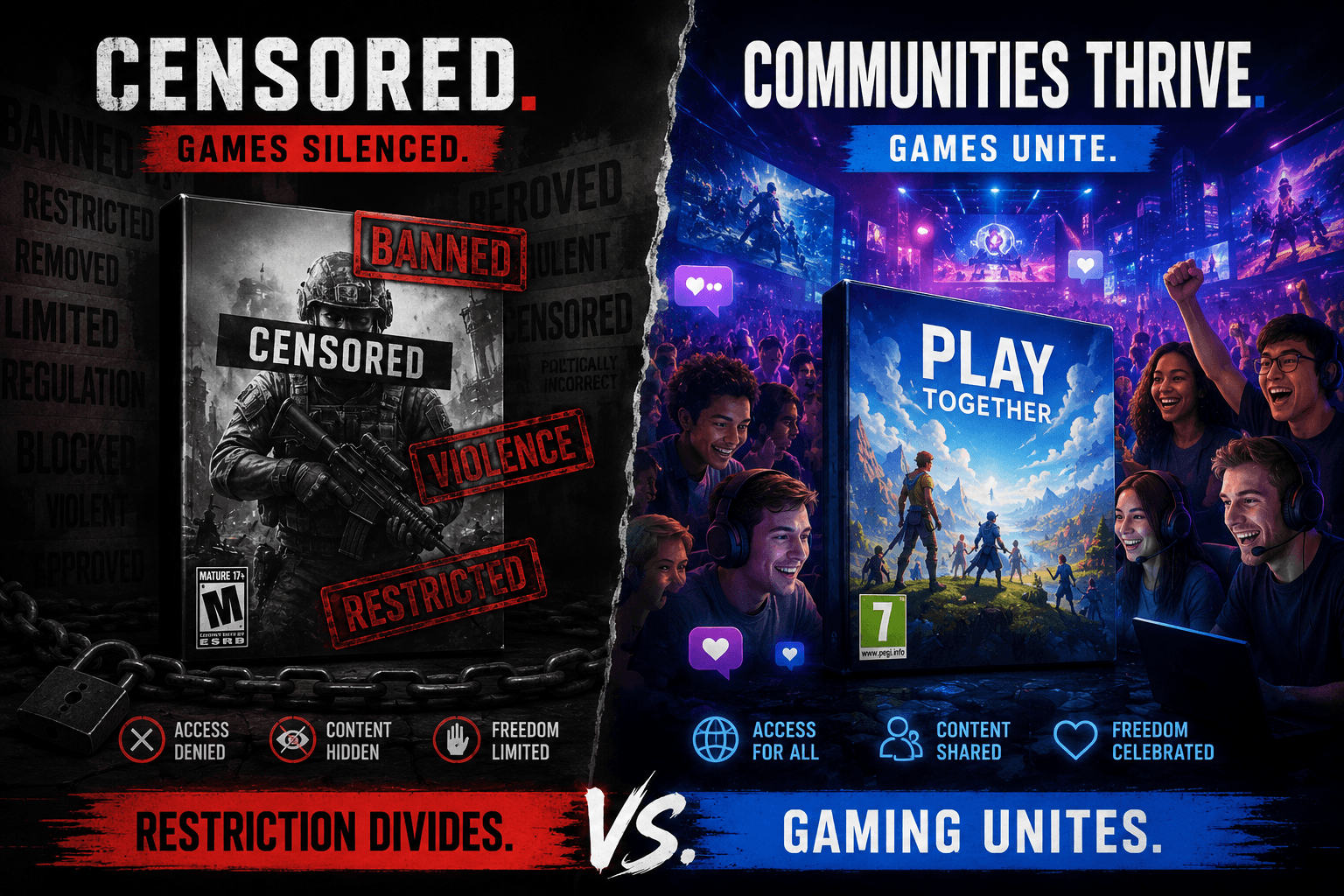
The gaming industry chose to self-regulate rather than face potential government regulation. The Entertainment Software Rating Board (ESRB) was created in 1994, establishing the rating system (E, T, M, AO, and others) that still appears on every game sold in the United States. The creation of the ESRB satisfied enough legislators that proposed laws didn't advance.
This is arguably the most significant outcome of game censorship pressure: the industry created a ratings infrastructure that, while imperfect, gave parents meaningful information and removed the most compelling argument for government intervention.
Australia's Classification System and Bans
Australia has one of the most active histories of game banning among wealthy democratic countries. For years, Australia's classification system had no R18+ rating for games (the adult equivalent of MA15+), which meant games with content that would receive an adult rating in other countries were either modified for Australian release or refused classification — which was effectively a ban.
Games refused classification in Australia over the years include Fallout 3 (originally, for allowing drug use to have gameplay benefits), Left 4 Dead 2 (initially, for gore levels), and several others. Most were eventually re-rated after modification or appeal. Australia finally established an R18+ category for games in 2013, which reduced the number of outright bans but didn't eliminate refusals entirely.
The GTA Effect
Grand Theft Auto: Vice City, San Andreas, and subsequent entries have been blamed for real-world violence, linked to crimes committed by teenagers who played them, and been the subject of legislation attempts in multiple countries. The "Hot Coffee" mod controversy in 2005 — which revealed hidden sexual content in San Andreas — resulted in an AO rating (which effectively removes games from most retail channels), causing Rockstar to modify the game and receive a re-rating.
The causal research on games causing violence has consistently failed to establish a meaningful link. A 2019 study by Oxford University's Internet Institute, examining real behavioral data, found no evidence that violent video game play caused aggressive behavior in teenagers. The Supreme Court ruled in Brown v. Entertainment Merchants Association (2011) that video games are protected speech under the First Amendment, striking down a California law that would have restricted sales to minors.
Country-Specific Bans Today
Specific countries continue to ban specific games. Germany has historically refused games with Nazi imagery (unusual from a US perspective where such imagery is protected speech). China bans games that depict unflattering portrayals of Chinese history or government and requires special versions of popular games modified for the market. Saudi Arabia has banned games with content that conflicts with religious values. These bans reflect each country's specific cultural and political contexts rather than a universal standard.
What Actually Changes
In practice, censorship pressure has produced: rating systems (ESRB, PEGI in Europe, others globally), age restrictions on purchase (enforced with varying consistency), platform policies (Xbox, PlayStation, and Nintendo have their own content standards for games on their platforms), and occasional genuine bans in specific markets. It has not produced the elimination of violent, sexual, or controversial content from games — which continues to exist and find audiences.
The medium has proven resistant to suppression for the same reason other creative media did: the demand exists, the content finds distribution, and legal restrictions in democracies tend to be challenged and limited by free speech protections. Game censorship has shaped the industry at the margins while leaving its creative range largely intact.