Aim in FPS games is a skill, not a talent. Players who seem to have natural perfect aim mostly have just put in more time on the right things. The frustrating part is that a lot of players put in time on the wrong things and don't improve as fast as they should.
Here's what actually develops aim, in order of impact.
Sensitivity: Get It Right Before Anything Else
Playing on the wrong sensitivity is the single biggest barrier to improving aim. Too high: your crosshair overshoots targets, micro-adjustments are impossible, and every shot requires corrective movement. Too low: targets escape your crosshair before you can track them, and flick shots require large uncomfortable arm movements.
The right sensitivity is the one where you can reliably track a moving target without overshooting and make small corrections without losing the target. For most players, this is lower than their instinct says. High sensitivity feels fast and responsive; it's usually less accurate.
Find your sensitivity by putting your crosshair on a point and doing a 180-degree turn. If your crosshair ends up significantly left or right of where you aimed after the turn, adjust until it consistently lands on the point. Set it, stick with it for two weeks minimum, and don't change it again for a while. Changing sensitivity constantly means you never build muscle memory.
Crosshair Placement
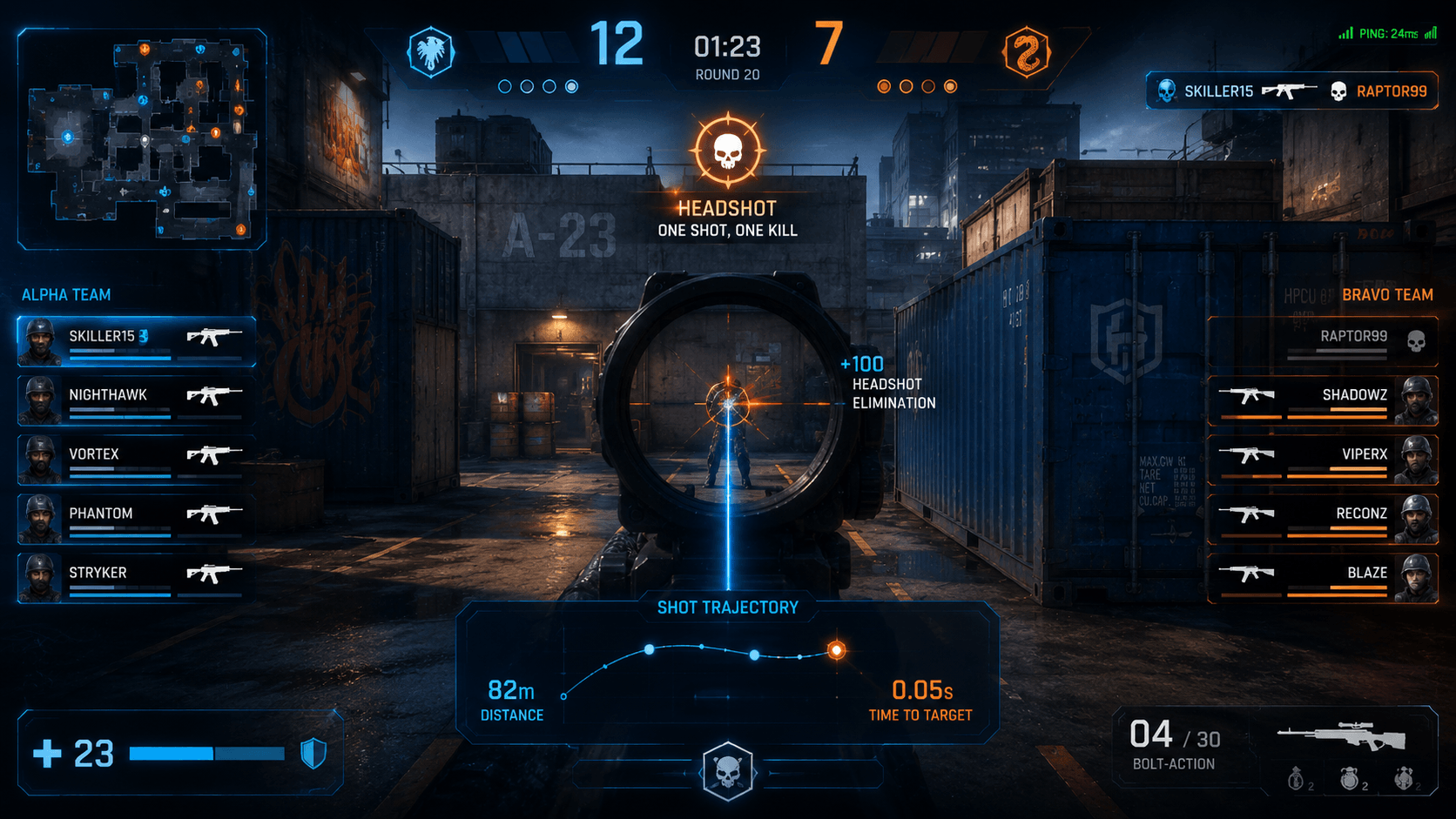
This is more impactful than raw mechanical aim skill at almost every level below professional. Crosshair placement means keeping your crosshair at head height where you expect enemies to appear, rather than aiming at the ground and lifting up when you see someone.
Every game has predictable positions where enemies appear. Learning those positions and pre-aiming them with correct head-height placement means that when an enemy appears, you need a tiny adjustment rather than a large one. A player with mediocre mechanical aim but excellent crosshair placement will consistently outperform a mechanically skilled player with poor placement.
Practice this by consciously keeping your crosshair at head level during every session. It feels awkward at first because it's not instinctive. After a few weeks, it becomes automatic.
Aim Trainers
Aim trainers (Aim Lab, KovaaK's) isolate the mechanical component of aiming into focused exercises. Tracking scenarios improve your ability to follow moving targets. Flicking scenarios improve your ability to snap to a target accurately. Micro-adjustment scenarios improve precision at close range.
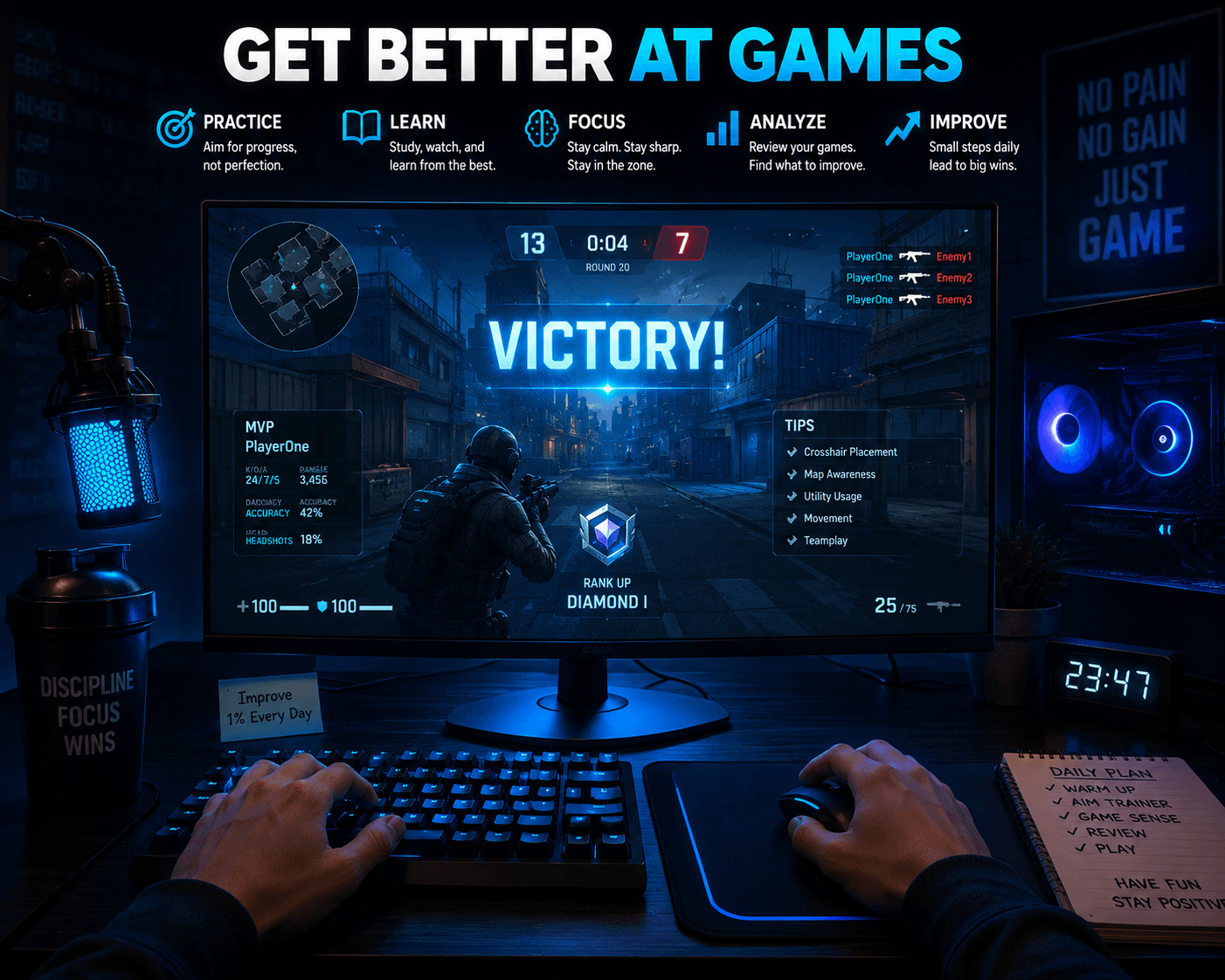
Fifteen to twenty minutes of aim trainer before a gaming session is a common routine for players serious about improving. The key is specificity — identify the type of aim you struggle with in-game (tracking, flicking, or close-range precision) and do scenarios that target that type.
Aim trainers aren't magic. They improve mechanical skill in isolation; they don't improve game sense, crosshair placement, or positioning. Use them as a supplement, not a replacement for in-game practice.
Recoil Control
Most automatic weapons in FPS games have recoil patterns — the gun kicks in a predictable direction as you shoot, and learning to compensate for that pattern keeps your bullets on target. In games like CS2, weapon recoil patterns are fixed and learnable. In Valorant, they're similar. In Warzone, they vary more.
Find a recoil control guide for your specific game and weapon and spend time in practice modes learning the compensation movement. This is mechanical but learnable, and mastering it dramatically improves accuracy at medium to long range.
Play Deathmatch
Deathmatch modes remove economy, strategy, and team coordination from the equation and put you in pure aim scenarios. Playing fifteen minutes of deathmatch before ranked games warms up your mechanical aim and gets you into the right mental state. Cold aim in your first ranked match is a consistent reason why early-game performance is worse than late-game performance even within the same session.
Record and Review Your Misses
Most games have replay or clip systems. When you miss shots that you feel should have hit, watch the replay from a neutral camera angle. You'll often see that the miss was due to something identifiable — bad placement, compensating wrong direction, shooting through a corner where you thought you had an angle but didn't. These patterns are fixable once you see them.
The Timeline
Consistent aim practice — thirty minutes of aim trainer plus correct in-game practice habits — typically produces visible improvement within four to six weeks. The first two weeks feel like they're not working because you're building muscle memory that hasn't become automatic yet. After that, the improvement starts to show up in matches as well as in training.
Don't compare your aim to professional players. Compare it to where you were six weeks ago. That's the relevant measurement.